
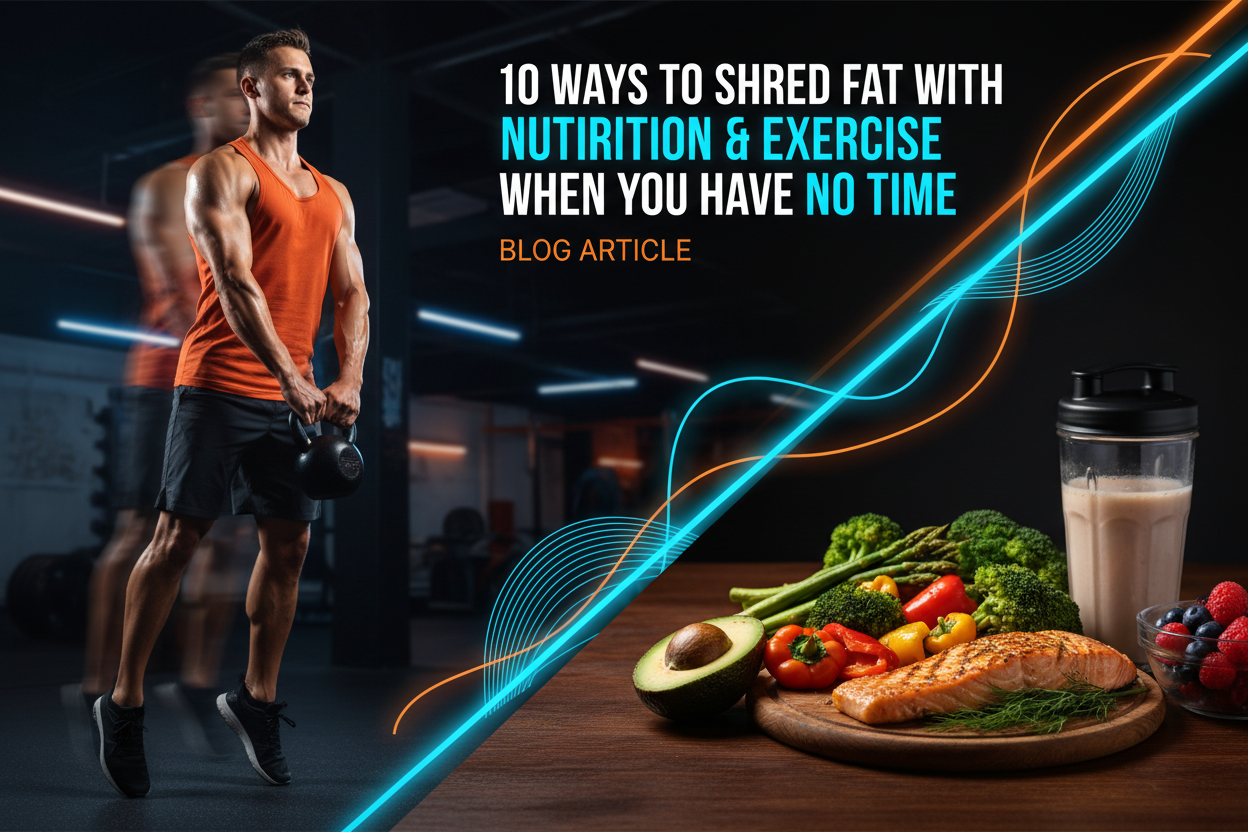
After losing 30 pounds of fat in two months, and gaining 20 pounds of muscle in three months, Here is what I learned.
The three biggest imbalances of American diet are too much sodium, too much calcium and too many omega six. To offset these we need to intake more magnesium which offsets the sodium, more potassium which offsets the calcium and omega 3 which offsets the omega 6. Outside of that... No Refined Sugars. No consumption of animal products over 20% of diet (grass fed, pasture raised, wild caught only) No Vegetable/Seed Oils (deep fried foods especially) and Exercise, no exceptions.
True health is the focus on the cause not the cure with knowledge that the medicine is from the plate not the pill.
Certainly glad to help everyone that's for sure. Typically everyone is at a different place and as a result has different goals. There's more than enough information to be shared with everyone, abundantly. Everyone deserves health- looking good isn't as big of a deal as feeling better about ourselves and creating longevity.
First things first. Know the difference between simple and complex carbs. Stick with complex and cut out simple. Simple are cakes, cookies, chips, etc. Complex are potatoes, rice, and berries. Sugar from berries and fruit are okay (organic only). Cutting out refined sugar, white flour and gluten will help cut down the visible fat. Replace bread with a 100% flourless sprouted whole grain living food bread. Food for life is a great brand. Speed up the metabolism with specific whole foods that do this naturally. Eating 5-10 times per day with smaller amounts the size of your fist with a whole foods (no ultra processed foods and minimal processed) based diet. Alternatively, intermittent fasting and only eating twice a day on a low carb diet to keep the body focused on using stored fat as energy is great to and keep continual insulin spikes. These are great method to burn fat quickly. No deep fried breaded foods. No refined sugars, no animal products, no vegetable oils, exercise and no exceptions. If you must have meat then 20% of your diet should be meat, 4oz servings as a side- grass fed red meat, free range chicken/eggs and wild caught fish. Those are ALL meat. 5% of your diet should be dairy. Spend a couple extra dollars and get the organic pastured dairy. Also almond, hemp, cashew milk etc is recommended. And of course organic produce and preferably NON-GMO everything.
Should I work out on an empty stomach? For years, this has been one of the most common questions I've been asked by people looking to lose weight. According to some research, it makes total sense to train in a fasted state on some workout days, and I can tell you from first-hand experience that fasted high-intensity cardio-like interval speed bursts produces superior fat-loss results.
It may go against the golden rule of meal timing—that your biggest meal should come right after your workout—but for one day a week, change things up and keep your body in a fasted state a little longer (1 to 2 hours) after you finish a short bout of sprints. And for athletes on a low-carb diet, the effects will be even more pronounced. Just make sure that your intensity is high and your duration is short.
In fact, intensity and duration are inversely related. After all, you can only sprint for so long, right? So it follows that if you're training for an hour, your intensity must be reduced to allow you to last that long. That's not what we want here. Remember, on a low-carb diet, you should be doing about 5 to 10 minutes of high-intensity work with the option of following those interval speed bursts with some light cardio for another 30 minutes or so.
Intensity is the key to losing fat and staying lean because it triggers the release of hormones that preserve muscle (i.e., growth hormone and testosterone) and help unlock stored fat (i.e., epinephrine). If possible, do your best to perform your interval speed bursts (and most of your workouts in this program) first thing upon waking in the morning after an overnight fast. If your schedule only allows you to work out later in the evening, make sure to wait 3 to 4 hours after a meal before training for maximum fat burning. This will ensure that insulin is low and your body more readily taps into its fat stores as a source of fuel for your workout
Research has suggested that carb intake before or during an exercise session can blunt the expression of several metabolic genes following exercise. Insulin may play a role here. Another way to think of it is that providing nutrients to the body makes it experience exercise as less of a stressor than fasted-state training. Why should it adapt or compensate when all the fuel it needs has been provided?
So should you exercise in a fasted state all the time? No. But you certainly can on certain days, like when carb intake (and thus insulin) will be low. Fasted exercise means that you're working out when your blood sugar and glycogen stores might be a little low. This often makes fasted workouts more challenging—you simply don't have enough fuel in the tank. But again, you should only be exercising at a high intensity for only 5 to 10 minutes here, which will exert the perfect amount of energy.
The cool part about fasted exercise and higher-intensity exercise is that both train your body to become a better fat-burning machine. And they've even been shown to have favorable effects on muscle building compared with training in a fed state, especially where strength training has been employed.
Can't make it through a fasted workout? Don't stress, but don't go fueling up on a full dish either! Eat a small amount of protein (some protein powder in water), and you'll benefit your metabolism, and help burn fat, all at the same time.
Here's at least 10 things everyone should know out the gate.
1. Eat real food- That stuff in boxes lining the shelves of the supermarket? That's not food. That edible material in tins, cans, and plastic pouches with seemingly endless lists of ingredients? That's not food either. Eating real food, not man-made junk laced with chemicals, is the key to successful weight management. I can't state it enough. It's likely the main reason you're trying to lose weight to begin with. Eating real foods cools inflammation and reestablishes proper hormone communication, which automatically helps your body release fat it doesn't need. You stay lean without even really trying.
2. Eat when you're hungry, stop when you're 80% full- You know the feeling—you're enjoying a meal, perhaps going for seconds or thirds, caught up in the bliss of it all. Half an hour later you feel as bloated as a Swiss ball. You don't need to eat until you're full, and in fact, you're probably "full" well before you think you are. Stop at the first burp. By tuning into your body, you can learn to eat only when you're truly hungry rather than when you're stressed or anxious. Better yet, you can learn to stop when you're 80 percent full. If you find yourself craving food due to stress, then find an alternative like a quick burst of activity or meditation to change your focus and reduce your stress load.
3. Be mindful and love what you eat- So many of us lose our way because we live our lives on autopilot, never paying attention to what we're doing or saying, thinking or feeling. This is especially true when it comes to eating. It's way too easy to eat two or three doughnuts as you drive to work in the morning, and even easier to halfheartedly devour a large order of fries while you're balancing a spreadsheet or preparing a report at work. To prevent this, never eat while you're watching TV or working at your computer. Instead, practice mindful eating. When you sit down to a meal, you should be focused on how your body feels and each bite that you take. By doing this, you're allowing yourself to feel true appreciation for the food you eat, and you'll ultimately develop a more mindful approach to eating.
4. Move more- Never underestimate the importance of moving. Especially going for a walk or doing calf raising for 10 minutes after eating to mitigate the spike of insulin and to keep your body from retaining that glucose as fat. And during the day it's not about running a marathon or bench-pressing 100 pounds, mind you, but simply getting off your big fat sofa and moving around. It's really all about micro-movements. Most of us spend our days trapped behind a desk or binging Netflix, and when we're not, we're sitting in our car, on our way to and from that desk or Netflix show. Simply taking the stairs, taking a walk around the block, or getting up every hour or two to do a few stretches goes a long way toward keeping your muscles strong and your metabolic rate high. Keying into this movement mind-set will keep you trim.
5. Build muscle and ban long over extended cardio- Your body is often compared to a furnace, as it burns calories all day long. The general thinking is that working out accelerates this calorie burning. It does, but it's not quite as simple as that. At most, exercise accounts for only 15 percent of your total daily caloric expenditure. Your basal metabolic rate actually accounts for 70 percent of the calories you burn every single day. Thus, it makes sense to focus on increasing your basal metabolic rate, right? The only way to do that is to increase your lean body mass—a.k.a. your muscle—and that means skipping the treadmill for bodyweight or external resistance exercises. After all, we've seen how long, slow cardio destroys your body and depletes vital fat-burning hormones like triiodothyronine (T3), growth hormone, and testosterone. Your goal should be to lift heavier weights that allow you to perform only 4 to 8 reps or so. And don't forget about the power of lowering that weight slowly (eccentric contraction) to get more bang for your workout bucks.
6. Set up your environment to win- The legendary Russian author and playwright Anton Chekhov once made a proclamation about writing drama that writers of all kinds still follow to this day. It's about stripping away unnecessary elements from any story in order to make it stronger. His famous words? "If you say in the first chapter that there is a rifle hanging on the wall, second or third chapter it absolutely must go off. If it's not going to be fired, it shouldn't be hanging there." The same can be said for those chocolate-covered pretzels in your cupboard—if you keep them around, they will get eaten. It's doubly the same for negative friends who engage in unhealthy habits—keep them around and you'll likely end up mimicking their behavior. That's just how it works. You deserve to elevate your life, so that means stripping away all the harmful elements currently polluting it. Stock your cupboards with healthy snacks and make sure you don't keep any junk in your fridge. Ditch the downer, toxic friends and join a supportive community filled with like-minded people who will support and encourage you. This is so much better than doing things on your own. Elevate it all.
7. Strive for progress, not perfection- This is about progress, not perfection, and like anything worth doing, it gets easier with practice. You have to go easy on yourself. If you screwed up and ate something you knew you shouldn't have, let it go and move on. If you didn't get in your workout, don't beat yourself up. Do it tomorrow. You're only human, and that means there will be times—perhaps many—when things don't go as planned. It happens, but you simply need to get back up, dust yourself off, and keep on trekking. I love the Japanese principle of kaizen, which essentially means "constant, never-ending improvement." A life lived in a constant state of gentle refinement is the only way to lasting success. That's what it's all about.
8. Be consistent- Key to the principle of kaizen that I just mentioned is one more familiar to us: consistency. If you eat well only occasionally, then you're not going to enjoy the slim, healthy body you want. If you aim to work out a few times this week and then stop for several months because you're sore, how are you supposed to progress toward the body of your dreams? You are much better off mastering small daily habits that, over time, will create massive change. These small daily habits can include walking, sleeping 7 to 9 hours, making a green juice, connecting with friends, laughing, doing 25 bodyweight squats, and anything else that can help to elevate your life. Although slightly less effective than daily habits, consistent behaviors can add up. For instance, doing a 1-day fast every week is a consistent behavior, even though it is not done daily. Get it? Small things done consistently will trump massive efforts that never stick.
9. Keep learning- Knowledge is power, but only if put into action. However, that action is less likely to happen if you are not first motivated by learning new and exciting ideas and strategies. You're either feeding your mind with new knowledge that helps you grow and motivates you to eat healthier and live a more active life or you're not. If you don't continue to plant new seeds in the garden of your mind, the weeds will automatically grow out of control. The mind is a precious and amazing asset, but it needs to be directed. Turn off the radio and listen to inspiring audio-books and podcasts instead. Read books on health. Stop watching fake "reality" shows and go to educational seminars or watch eye-opening documentaries. You don't necessarily have to cut all these activities out of your life, but just make sure that you're engaging in behaviors that will inspire you to live your healthiest life possible.
10. Be grateful and happy- This final commandment is a simple one, and it's truly the secret to life. Whether your goal is to become a millionaire or simply lose 20 pounds of fat and feel great about yourself, being grateful and happy is the path. No matter where you are right now, no matter what you're struggling with, you have so much to be grateful for. It's easy to forget this when you're bombarded on a daily basis with so many worries. It takes a little work on your part, but you have to routinely tune your frequency a bit so you're more aware of the blessings in your life. There is no right or wrong way to show gratitude. You can keep a gratitude journal, write thank-you cards to friends and family, or do anything else that keeps you in touch with the good things in your life. It's a universal law that you get more of what you focus on, so focus on what you're grateful for and you're likely to get more of it in your life.

Share:
Are The Mycotoxins & Acid In Your Coffee Slowly Killing You?
CBD FAQ's